La Seu – Cathedral of the Virgin Mary in Palma de Mallorca
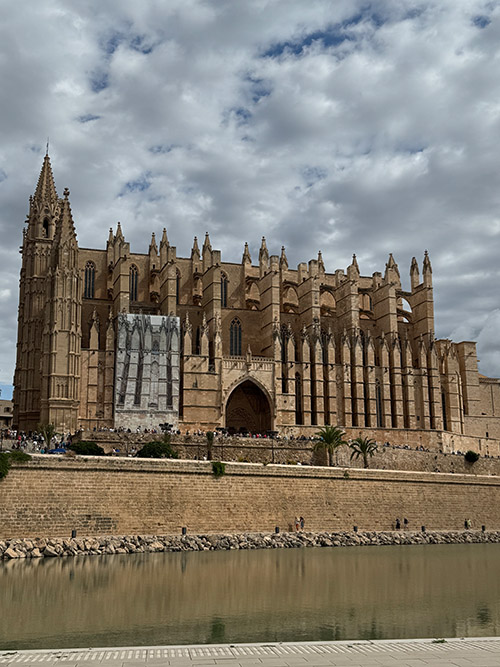

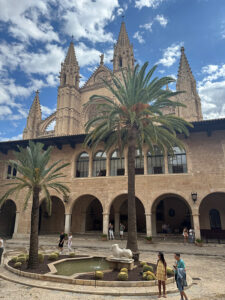
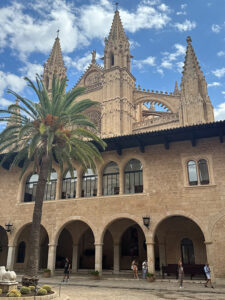
In Palma, the capital of Mallorca, stands, if not the eighth Wonder of the World, then certainly the largest and most mysterious example of Gothic architecture in Europe.
The History of Palma Cathedral
The Cathedral of Our Lady of La Seu, as the locals call it, began construction in 1229, immediately after the island was liberated from the Arabs by the Kingdom of Aragon. James I ordered the construction of a Gothic sanctuary on the site of an Islamic mosque in honor of the Virgin Mary, who, according to legend, saved a Christian fleet during a great storm on its way to the islands.
The vow was fulfilled, and construction of the cathedral took over a century, lasting until 1601; however, if one includes all subsequent renovations, the structure has been under construction for over 800 years, and even today, changes are constantly being made.
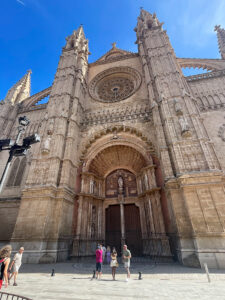
The architecture of the Cathedral of the Holy Virgin Mary in Palma de Mallorca incorporates Gothic, Renaissance, Baroque, and Modern styles.
The building is 112 meters long and 33 meters wide. Its height at the highest point is 45 meters, which is 2 meters taller than the famous Kells Cathedral and the same amount shorter than the cathedral in Bouvet (France), while Milan’s Duomo is just 20 centimeters shorter. The cathedral’s floor area is 6,655 square meters, which is larger than a soccer field.
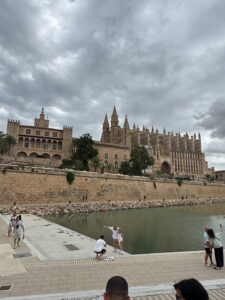
This cathedral is the closest to the sea, and its location is so picturesque that any other cathedral would envy it.
Gaudí himself had a hand in the cathedral’s interior design. In 1904, he carried out a radical renovation, during which he introduced electric lighting to the sanctuary, implemented numerous acoustic solutions, thought through every detail, and imbued it with meaning. It was a radical overhaul in the centuries-long history of La Seu.
The Tomb of the Kings
The Cathedral of the Holy Virgin Mary in Palma was originally built as a religious edifice and as a burial place for the kings of Majorca. James II ordered that he and his descendants be buried here. Since then, James II and James III have been laid to rest here.
The cathedral’s chapel and the royal crypt are among the least studied parts of the cathedral in Palma.
A Cathedral with a Soul
La Seu is famous for its Rose Window, or rose-shaped window, which has a diameter of 13 meters and an area of 150 square meters—the “Gothic Eye of the World.” It contains 1,236 stained-glass panes. When light passes through it, a magical light show is created.
Twice a year—on February 2 and November 11—a magical spectacle known as “The Eight” (or El Ocho in Spanish) unfolds in the morning hours. Between 8:00 and 10:00 a.m., sunlight creates a perfectly calculated light projection that is striking in its precision.
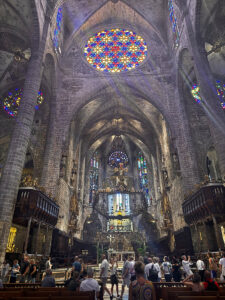
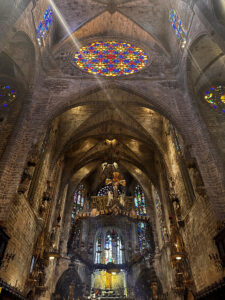
The rose window was glazed in 1599, and since then the glass has been replaced several times due to storms and hurricanes.
In addition to the light show, each of the bells has its own name. There used to be a tradition of naming bells. The largest bell weighs 4.5 tons and was named Ella. The names, in descending order of weight and size, are Barbara, Antonia, Sa Nova, Na Mitja, Tercia, Utrnik, Prima, and Picarol.
The play of light and the sound of the bells are complemented by a unique organ that has stood here since 1328. It features 1,477 pipes, 56 manual keyboards, and 30 pedals. The construction of this organ marked the beginning of the school of Majorcan organ builders. Since 2000, an annual organists’ festival has been held in Majorca.
The Terraces of the Cathedral in Palma
Every summer, you can visit the terraces of the cathedral in Palma. This is also one of the city’s main attractions, and from a height of over 40 meters, it offers a wonderful view of Palma de Mallorca from a unique perspective.
To access the terrace, you must book a tour in advance and be sure to specify that you want to visit the roof. This experience will cost you about 12 euros.